Derlivered on Rosh Hashanah Morning 2023 at Congregation Kol Ami, Thornhill, Ontario.
Let me ask you a question: Have you looked at the sky today?
The story is told that once the great Rebbe Nachman of Bratzlav was looking out his window and he noticed one of his disciples, Chaim, rushing down the street toward the market. The Rebbe called out, “Chaim, have you looked at the sky today?”
“No, Rebbe, I haven’t!” Chaim called back.
“Well, what about the street? Have you looked at that?”
‘Yes, Rebbe, of course” the disciple answered.
Reb Nachman continued, “Tell me, Chaim, what did you see in the street?”
Chaim said. “I saw people, carts, and merchandise. I saw buyers and sellers all coming and going, haggling over prices…”
“Chaim,” Reb Nachman responded. “Listen. In fifty years, in one hundred years, on this very street there will still be a market. Vehicles will still bring merchandise; buyers and sellers will still haggle over prices. But I won’t be here, and neither will you. So, I ask you, Chaim, what is the good of all this rushing around if you don’t have time to look at the sky?”[1]
As the new year begins, we pause to take stock. To consider the wellness of our lives – whether our actions match our priorities; whether we are living up to our own values. Of course, the answer is always a mix. We are making progress on some goals, and lagging behind on others. We’re only human after all.
But if we are honest – and today of all days we are supposed to be – then I think many of us will have to admit that there is an area where we have a disconnect. An area in which our lives and the society that we are building do not match our deepest values. And that area can be illustrated by this story about Rebbe Nachman and by the question he asks his busy disciple: What is the good of all this rushing around if you don’t have time to look at the sky?
Judaism teaches that one of the fundamental elements of being human is the ability to stop and take stock. It’s what we do on the High Holy Days. But it’s not meant to be a two-day-a-year activity. It’s supposed to be something we do on a regular basis.
There is a beautiful midrash that teaches this lesson by retelling the story of the Moses at the burning bush. We all think we know the story of the burning bush: Israelites in slavery, God makes a burning bush, Moses shows up and the rest is history. (You’ve all seen the movie!) But that’s not the story the Rabbis tell. They say that before any of that happened, God made a burning bush in the desert, but nobody noticed.
The Israelites were languishing in slavery, and God was ready and waiting to set them free. But shepherds in the desert just kept walking right by the burning bush. After all, there are lots of bushfires in the desert – it’s a hot, dry place. And everybody was busy. So what reason would anybody have to notice one little bush?
Until Moses came along.
Moses was wandering by with his flocks, and he did something no one else did – he stopped to see. According to the text, he said to himself: אָסֻֽרָה־נָּ֣א וְאֶרְאֶ֔ה– Let me turn aside to see this great sight.”[2]
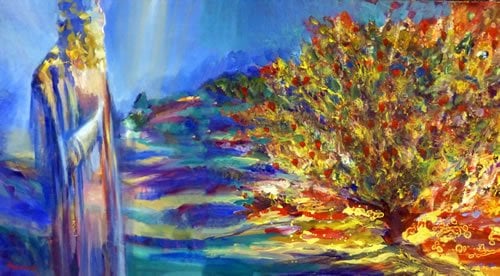
That “turning aside” is crucial. That shows that Moses made a concerted effort to notice the bush. He stopped to look. He was the only one who stopped to noticed that something special was happening here. He was the only one who saw that God was present. And so he was the only one who could redeem our people from their slavery.
I love this midrash because it turns the traditional story on its head. It says that it’s not that Moses was chosen for the job. Moses chose. He chose to be the leader. He chose to believe that a better life was possible for his people. He chose to אָסֻֽרָה־נָּ֣א וְאֶרְאֶ֔ה – he chose to stop and see.
What made Moses special was his ability to pause – to pause the rushing river of his life, to pause his race from one place to another across the desert. That enabled him to see the world around him; to see both the needs and the possibilities before him.
I think that this midrash is meant to teach us something really important. This notion of “אָסֻֽרָה־נָּ֣א וְאֶרְאֶ֔ה – let me stop and see,” it’s not just about Moses; it’s about human life. It’s about how to be your best self. It’s about how to pause the rushing river that we all live in every day. The point of the story is that you have to pause in order to see. You have to step out of the rat race, in order to be able to think and dream and imagine a better world and a better version of yourself. In a sense, our very humanity depends on our ability to stop.
Which brings me to another question. Do you think you would have stopped to look at the burning bush that day? Do you think you would have looked up from whatever you were doing to notice that this one burning bush was different from all the other ones that you had already passed by? Or would you have been too busy?
I suspect that most of us would have been busy. We would have been have running our errands, checking the news, answering texts, catching up on email, scrolling Instagram, planning dinner. We would have walked right by the burning bush. And there would have been no exodus.
The message of אָסֻֽרָה־נָּ֣א וְאֶרְאֶ֔ה – of slowing down so that we can see – is one that we need today more than ever. We live in a society that teaches us to measure our worth by how busy we are and how much we get done. We are always running around; always being bombarded with information. We are always expected – and expect of ourselves – to be in contact, to get things done, to get back to people, to take care of responsibilities. We are always busy, and we are never enough.
And it is not serving us.
We’re tired. We’re stressed out. We are somehow both information-addicted and incredibly disconnected at the same time. We never stop – and as a result we are losing our ability to look up at the sky, to notice the burning bush, to connect with each other, to be present, to daydream, to imagine a life that’s about more than just “What did you get done today?”
How do we free ourselves… from this 24/7 rat-race? From this constant bombardment of responsibility and information and expectation?
Judaism says: אָסֻֽרָה־נָּ֣א וְאֶרְאֶ֔ה – you have to stop. You have to learn to pause, to transcend the busyness. And Judaism gives us various tools for learning how to pause: the High Holy Days, blessings over our food; daily prayers and rituals; Shabbat.
I want to talk about Shabbat – both because today is Shabbat, and because I think in this world of constant rat-race we need to be talking about everything that Shabbat means. We need to be talking about the fact that the word shabbat literally means “to stop” in Hebrew. That Judaism has handed us exactly the kind of pause that our souls are aching for – an island in time when responsibilities and stressors can melt away, when we can focus on what matters most, rather than on what feels most urgent.
The Rabbis believe – and I think they’re right – that when we observe Shabbat, we benefit from it.
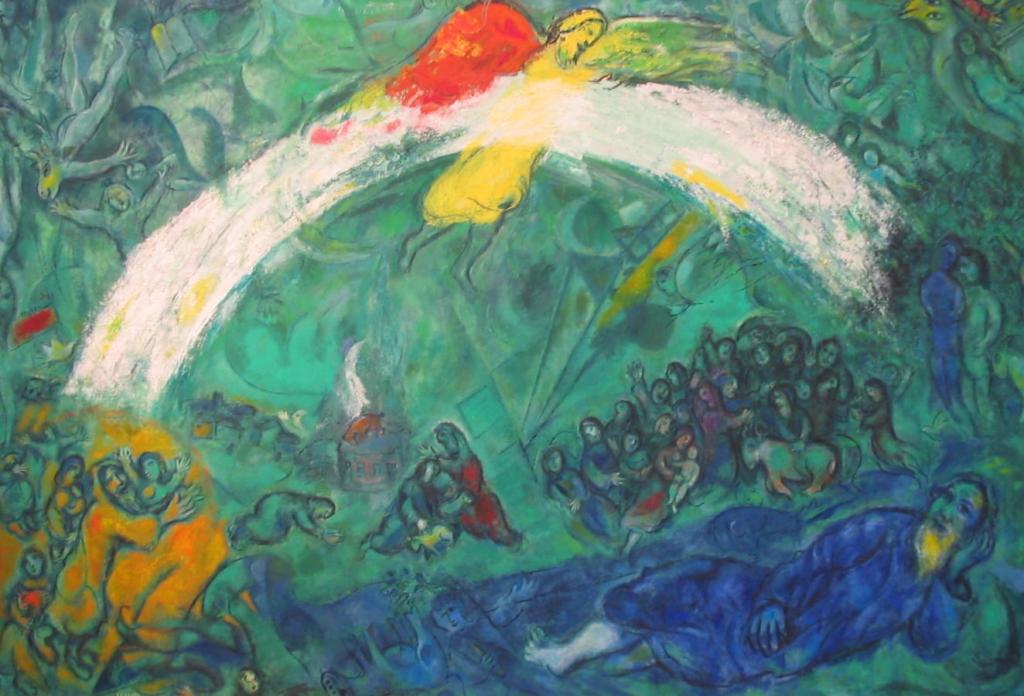
There’s a story in the Talmud about a guy with a funny name. They call him Yosef Mokeir Shabbei – Yosef who Loves Shabbat. And this Yosef would always put his energy and his resources into preparing for Shabbat. He would spend his week thinking about and getting ready for a wonderful Shabbat observance.
Now Yosef had neighbour who was very rich and very stingy. And the neighbour received a prophecy that someday Yosef would inherit everything he had. So the stingy man, looking to keep his stuff out of Yosef’s hands, went and sold all of his property and bought a single pearl – which he placed in his hat. He thought to himself, “If I wear this all the time, then that Yosef can never get his hands on my fortune.
But one windy day the neighbour was crossing a wide river and the wind blew his hat off his head. The pearl fell into the water and was swallowed by a big fish. Then some fishermen came along, caught the fish, and brought it back into town to sell it. But it was late Friday afternoon. Who would buy such a large fish at a time when everybody was already busy with their preparations for Shabbat? Who, except Yosef who Loved Shabbat. He always put his best into Shabbat.
They brought the fish to him and he bought it for his sabbath meal. He cut into it, and there was the pearl.
The Rabbis say, מַאן דְּיָזֵיף שַׁבְּתָא — פַּרְעֵיהּ שַׁבְּתָא. One who gives to Shabbat, Shabbat gives back. [3]
Of course, I don’t believe that observing Shabbat will literally bring you riches. But I think there is something to this idea that when we learn how to pause, we are richer for it. Think about all of the benefits of a Shabbat practice, or a meditation or prayer practice. When we commit to them over time, we grow. We grow in clarity; we grow in strength and calm. We grow in the ability to see options, to connect with others, to build community.
We might even grow in productivity. This is interesting, because we think we’re getting so much done by working all the time. But it turns out you can get more done by taking regular time off. Recent research has shown that people who work 40 hours a week actually get more done than those who work 60 hours a week.[4] They are more productive in fewer hours, probably because they’re better rested and more focused while they’re actually working. That in and of itself is an argument for taking a real break on a regular basis!
But it’s not really Judaism’s argument. Judaism doesn’t look at this in a utilitarian way – that you should rest because you’ll be more productive. It says that we should rest because we deserve it. Because we are created in God’s image, and that entitles us – and everyone – to basic human dignity.
We usually think of Shabbat as connected with the story of Creation, but near the end of the Torah, Moses reframes the whole thing as a human rights issue:
שָׁמ֛֣וֹר אֶת־י֥וֹם֩ הַשַּׁבָּ֖֨ת לְקַדְּשׁ֑֜וֹ….
Observe the day of Shabbat and keep it holy…. you, your son and daughter, your servants, your animals, and the stranger who lives among you.
לְמַ֗עַן יָנ֛וּחַ עַבְדְּךָ֥ וַאֲמָתְךָ֖ כָּמֽ֑וֹךָ׃
So that your servants may rest as you do.
And he continues:
וְזָכַרְתָּ֗֞ כִּ֣י־עֶ֤֥בֶד הָיִ֣֙יתָ֙ ׀ בְּאֶ֣רֶץ מִצְרַ֔֗יִם
Remember that you were a slave in Egypt and … and therefore God has commanded you to observe the sabbath day.[5]
So in this reading, Shabbat is a kind of Labour Day – a day to mark our collective historical memory of slavery and a reminder that there are still people experiencing versions of it. This Shabbat is not just a day to appreciate nature, but a reminder that all of God’s creatures are worthy of dignity and respect. That we all deserve a day of rest and good food and supportive community. That we all deserve a chance to pause the rush.
That’s a powerful statement in a world where we are constantly pushing ourselves to prove our worth by being busier and busier. Judaism says no – that’s backwards. You don’t need to prove your worth by getting things done; your worth is in inherent in your humanity, and that’s why you deserve a day of rest.
So in the end, Shabbat is both a symbol and a vehicle for our humanity. It’s a symbol that reminds us of our inherent worth as human beings. And it’s a vehicle that helps us move toward our best selves. What a gift Judaism has given us.
So where does this leave us here and now – we who are tired and overwhelmed and aching for meaning and calm? It seems clear that we need more of what Shabbat has to offer. We need more slowing down, more being in the moment. We need to relearn how to look at the sky and how to notice the burning bush. We need to relearn how to pause.
If I was an Orthodox rabbi, I’d say to you: “We all need to be observing Shabbat – let’s stop driving on the Sabbath, stop using electricity, and it will be good for us if we do it.” And the funny thing is, I actually think there’s some truth to that. It would be good for us if we could support each other in such a radical transformation of the seventh day.
We liberal Jews tend to associate those traditional Shabbat practices with a feeling of restriction, with the burden of having to follow rules. But they actually have the potential to be quite freeing. I can tell you firsthand that having lived one year of my life that way about 20 years ago, I still remember how it felt on Friday night when the phones were off and the car keys were put away and the food was all prepared, and we were lighting the candles. I still think all the time about how the stresses of the week would melt away in that moment.
I haven’t had that in my liberal Jewish Shabbat practice – at least not yet. But I think it’s possible. And I think that in this 24/7 world, we liberal Jews ought to be giving a serious look at the idea of taking a real day off once a week. Both our Judaism and scientific research are telling us that that would be a really good idea. And, because we’re Reform Jews, we don’t have to be bound by the traditional practices. We get to be creative in crafting what our pause looks like. Let me give you an example. The author Tiffany Shlain, in her book 24/6, proposes something she calls a technology sabbath. It consists of turning off all screens for one day a week. No iPhone, no computers, no tablets for 24 hours. In this kind of Shabbat practice, you can still drive, you can turn on the lights, you can call a friend on a landline, you can work in the garden, or paint, or write…but no screens.
And the reason is one that a lot of us can probably relate to. Shlain writes that before she started doing this “I was on screens 24/7…. I felt powerless against the allure of the device in my hand.[6]”
It’s a good reminder that times change. That the burdens and the busyness of modern life look different from those of our ancestors. They needed respite from their daily slog of working in the fields, growing food, making clothing – and so they built their Shabbat practice around that. They outlawed fires and cutting and digging and cooking. And we have some of the same needs, but we have some very different ones we well. So of course our Shabbat will look different.
But that doesn’t mean we need it any less. Think of how much we would benefit from a whole day away from those things that sap our attention and keep us hustling for our worth. The devices, the expectations, the errands, the responsibilities. Think about the space it would open up if we put down our busyness. We could connect with each other. Read. Think. Daydream. Maybe we’d have time to look at the sky.
I believe that this generation of people needs rest and stillness more than we know.
Shabbat is one paradigm for how to attain that. It’s a time-tested paradigm that Judaism has handed down through the generations of our people, and I plan to do some very deep thinking this year about how to transform the seventh day into a time of really desisting from my busyness and really embracing calm. And I think there are other paradigms as well: we can be exploring ways to be present every day. To cultivate mindfulness and gratitude. To get out into nature. To put down our phones. Anything that helps us to pause and be still. Anything that helps us repair ourselves so that we can begin to repair our world.
I encourage us to cultivate a belief that we are capable of and worthy of learning to pause. That we don’t have to spend every moment hustling for our worth – and in fact, when we do stop, whether for 24 hours or 24 seconds, we and our whole world are better off for it.
אָסֻֽרָה־נָּ֣א וְאֶרְאֶ֔ה – Let us stop that we might begin to see.
In this new year, may we learn to pause. May we learn to look at the sky. May we pause long enough to notice the holiness that surrounds us all the time. May we find rest and humanity. May we seek stillness. And in the stillness, may we begin to find the path toward our own best selves.
[1] Gates of Shabbat 1-2.
[2] Exodus 3:2.
[3] B. Shabbat 119a.
[4] Tiffany Shlain, 24/6.
[5] Deut. 5:13-15.
[6] 24/6 p. xi.
 Rabbi Micah Streiffer
What a wonderful way to think about the meaning of the burning bush. Stop, look and listen. It gives real pause to the meaning of the high holy days. Not sure I’m for all you suggest for Shabbat, but study, prayer and community are there. Shopping is out. We generally visit with friends every Shabbat afternoon. It’s like our S’udah Shaleshet. We reflect, enjoy company, take time for a walk and are generally disconnected that way.
Thanks Ira! I appreciate the comment and I agree about the power of that kind of Shabbat practice. I’m not advocating for any specific practice – just for being thoughtful and concerted about constructing meaningful practices that give us rest and connection.