It turns out that one of the best parts of my job as a rabbi is the part that I never thought I’d be doing.
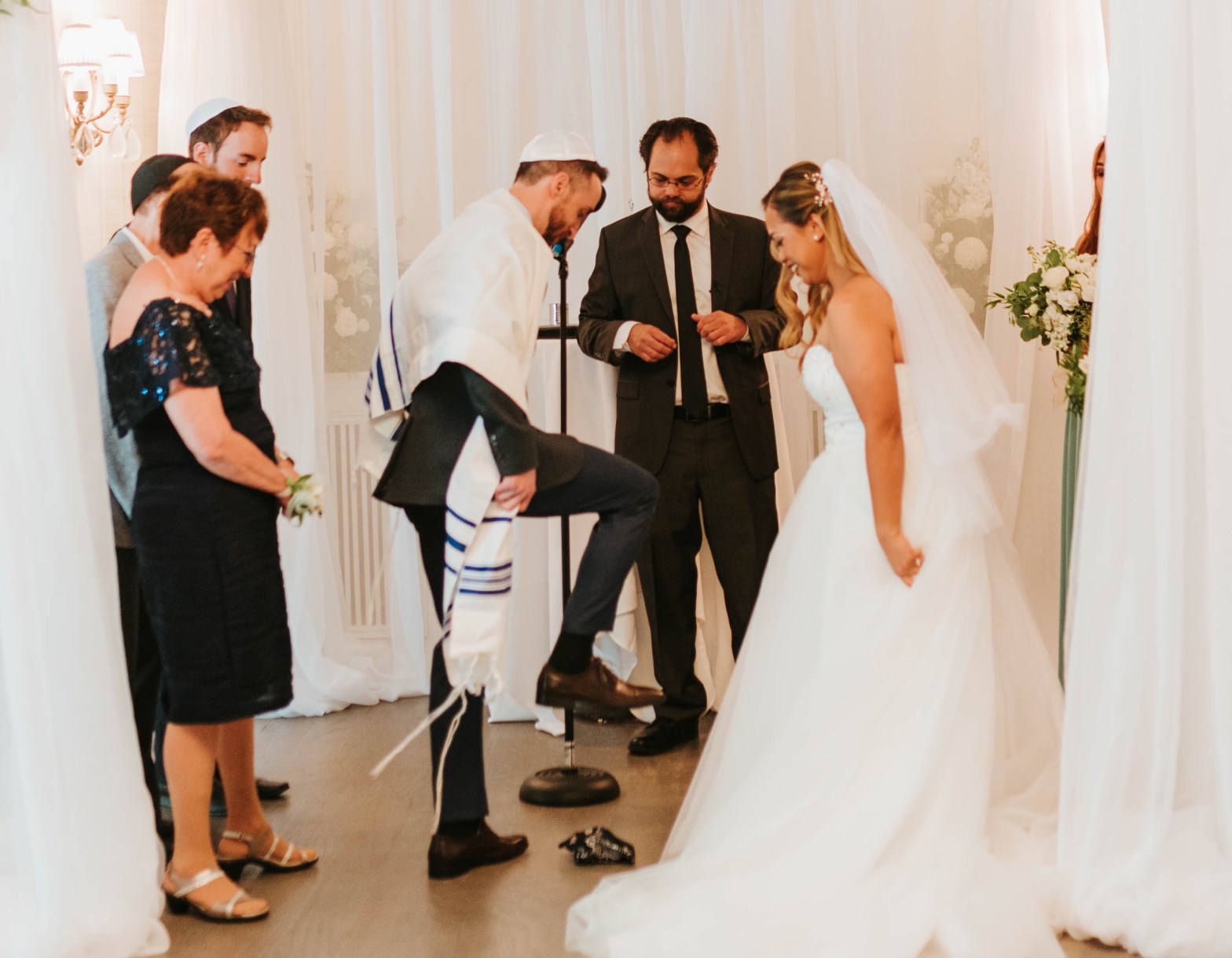
For the last year, I have had the privilege of working with a small cohort of interfaith couples who are preparing for their weddings. In each case, one partner is Jewish and the other partner is not, and they have made the decision to hold a Jewish wedding and to engage Jewishly together. So we meet monthly, on Zoom: for study about Judaism, to learn about the wedding ceremony, and to talk about what it means to them to build a home imbued with Jewish practices and ideas. And at the end, each couple celebrates a beautiful wedding – with chuppah, Seven Blessings, and breaking the glass.
This kind of format is not so unusual – although it is unusual in Canada for a rabbi to work with intermarrying couples. What is most noteworthy, though (at least for me), is the shift in thinking that got me here.
Let me explain.
Marriage is a very important moment from a Jewish perspective, and a highly symbolic one. Since the chuppah represents the home, the wedding ceremony symbolizes the formation of a new Jewish home – the passing of tradition to the next generation; the hope for future continuance of the Jewish people. A lot of the pomp, circumstance, and celebration of the wedding ceremony exists precisely to mark that exciting new beginning.
So it makes perfect sense, then, that rabbis look upon weddings with great seriousness. Officiating a marriage is an opportunity both to celebrate with a couple and to contribute to the Jewish future. To help strengthen and sustain the Jewish community by helping to strengthen and sustain a Jewish family. We perform Jewish weddings because Jewish weddings strengthen our people.
Which is why, for many rabbis, the decision to officiate a wedding comes in an “IF/THEN” format. IF you meet certain criteria, THEN I will perform your wedding. IF you show that you take Judaism seriously, THEN it will be a wedding that helps strengthen the Jewish people.
And in Canada, most often that “IF” involves both partners being or becoming Jewish.
I understand the thinking behind this. After all, for thousands of years, rabbis have been the leaders and gatekeepers of Judaism. The ones responsible for ensuring the strength of the Jewish people and the integrity of Jewish practice. If a wedding is to be a Jewish wedding, it’s up to the rabbi to ensure that the chuppah really, authentically, is the beginning of a Jewish home. Or, so the argument goes.
But there’s a problem with this line of thinking. Two of them, actually. The first problem is that we rabbis don’t apply it consistently. We only apply it when there is a non-Jew involved. We’re not really ensuring that every wedding is the beginning of an engaged Jewish home – after all, rabbis perform weddings all the time that involve two Jews who aren’t really engaged in Judaism. In those cases, we perform the wedding because we see it as an opportunity for engagement. We hope that by delving into Jewish ritual together, we can inspire these Jews to grow in their connection to Judaism.
Which brings me to the second problem with this line of thinking: we are missing the opportunity for that kind of engagement with couples where one partner is not Jewish. In their case, we most often say no. We politely turn them away – because we don’t feel we can authentically perform a Jewish wedding. And in so doing, we miss the chance to engage them, and they miss the chance to engage in Judaism.
Our tradition offers us another model. A way of approaching Jewish engagement that is not of the “if/then” variety. It comes from the first century sage Hillel, in a famous story from the Talmud:
שׁוּב מַעֲשֶׂה בְּגוֹי אֶחָד שֶׁבָּא לִפְנֵי שַׁמַּאי. אָמַר לוֹ: גַּיְּירֵנִי עַל מְנָת שֶׁתְּלַמְּדֵנִי כׇּל הַתּוֹרָה כּוּלָּהּ כְּשֶׁאֲנִי עוֹמֵד עַל רֶגֶל אַחַת! דְּחָפוֹ בְּאַמַּת הַבִּנְיָן שֶׁבְּיָדוֹ. בָּא לִפְנֵי הִלֵּל, גַּיְירֵיהּ. אָמַר לוֹ: דַּעֲלָךְ סְנֵי לְחַבְרָךְ לָא תַּעֲבֵיד — זוֹ הִיא כׇּל הַתּוֹרָה כּוּלָּהּ, וְאִידַּךְ פֵּירוּשָׁהּ הוּא, זִיל גְּמוֹר.
It once happened that a gentile came before Shammai and said: “Convert me on condition that you teach me the entire Torah while I am standing on one foot.” Shammai pushed him away with the measuring stick in his hand. The same gentile came before Hillel. Hillel converted him and said to him: “That which is hateful to you do not do to another; that is the entire Torah, and the rest is its interpretation. Go study.”
Babylonian Talmud, Shabbat 31a
This story is often seen as a centering of ethics and the “golden rule” in Judaism. (Hillel’s central teaching here is that we should treat others the way we would like to be treated.) But for our purposes, I am less interested in what Hillel teaches and more interested in how he acts. He welcomes the non-Jew and invites him to learn; he answers the query not with a litmus test but with an invitation. Hillel seems to understand that the very fact that this non-Jewish man has stepped into his study is, in itself, an act of Jewish engagement. And further, he seems to understand that inviting him for a process of learning is an opportunity to deepen that engagement.
Similarly, when a couple asks me to perform their wedding, they are performing an act of Jewish engagement. They are asking me, as a rabbi, to help them deepen that engagement through study and ritual. If, like Shammai, I turn them away (even if I do it politely and without a stick), I have missed the chance to help them strengthen their Jewish connection. If, like Hillel, I welcome them in and invite them to engage further, then we have an opportunity to build a Jewish future together.
This is exactly what I experienced with my cohort of nine interfaith wedding couples over the past year. In our monthly group meetings, in our one-on-one discussions, in our Shabbat morning synagogue visit, I witnessed a group of interested, curious, Jewishly engaged people – only some of whom are formally Jewish, but all of whom are in the process of building meaningful Jewish lives. Standing under the chuppah with each of them – marking and celebrating their relationships and the Jewish homes they are creating – has been an absolute blessing.
I think that we, as a Jewish community, need to shift away from litmus tests and toward creating engagement opportunities. We rabbis need to figure out authentic ways that we can say “yes” – that we can stand on the bima, in the classroom, and even under the chuppah with individuals who care about Jewish life, including when they are not Jewish themselves. Sometimes, of course, such engagement might ultimately lead to conversion. And while that is potentially a desirable outcome, it is not the point. The point, like Hillel says, is to zil gmor – to “go and learn” – to engage and explore, to build love and connection for Judaism, to bring the beauty of our tradition to life in our own lives. That is how we build the Jewish future, by building the Jewish present.

Rabbi Micah Streiffer is the founder and Director of LAASOK, the liberal Beit Midrash (“House of Study”). He performs meaningful Jewish wedding ceremonies, including for interfaith couples in many circumstances. He lives in Toronto, and can be reached at rabbistreiffer@gmail.com.
interfaith rabbi wedding Toronto Canada intermarriage mixed marriage Jewish Judaism Thornhill ceremony christian ideas rabbis officiants officiant justice of the peace script officiate perform intermarried inclusive inclusion inclusiveness
 Rabbi Micah Streiffer
One thought on “Embracing Interfaith Wedding Couples: Building the Jewish Future”