
This is the sermon I delivered on Kol Nidrei 5784/2023 at Kol Ami Congregation in Thornhill, Ontario.
How to be a prophet.
Part 1: Nobody wants to be a prophet.
Picture this: It’s festival time in ancient Jerusalem. You’re walking down the street, dressed in your finest. Leading your goat to the Temple for your sacrifice. You’re feeling pretty good – happy with things at work, looking forward to the family meal tomorrow night. You’re generally enjoying the holiday atmosphere in the city.
But as you turn the corner all that changes. The crowd has hushed; there are nervous whispers. You spot a man standing on a street corner, wearing a long white robe. His piercing eyes look out over the crowd, and he points a boney finger at you:
You think God cares about your little sacrifice? he says.
You think the Holy One cares that you starve your body and beat your chest?
You fast and pray, while people suffer. You turn a blind eye to injustice.
You shudder and walk faster toward the Temple. Your heart races. Your head is full of defenses against him: I do what I can. I donate and volunteer. I can’t solve everybody’s problems. But at the same time his words stay with you: Maybe I should be doing more.
The prophet must have been among the most reviled figures in ancient Israel. Nobody wanted to run into a prophet while they were out on the town.
And all the more so, nobody wanted to be a prophet. I mean, their job was essentially to stand on street corners and yell at people. No one was standing in line for this profession. It wasn’t on the “Forbes Top 90 Jobs” of 586 BCE. Even the biblical prophets try to deny that they are prophets! The prophet Amos was once called out by the king, and he responded: “לֹא־נָבִ֣יא אָנֹ֔כִי וְלֹ֥א בֶן־נָבִ֖יא אָנֹ֑כִי – I am not a prophet, and I am not the son of a prophet.[1]“
Nobody wants to be the one who sees wrongdoing and injustice everywhere. Nobody wants to be the one to call people out.
And yet, with the benefit of hindsight, Judaism has done something very brave. It has placed the prophets at the centre of our way of life. Built our Bible around their writings; encouraged us to read and interpret their words; to learn from them. To try to see the world through their eyes.
“How to be a prophet” is information that almost no one in ancient Israel was ever seeking. And yet, in a sense, it is exactly what our tradition asks of us today.
How to Be a Prophet
Part 2: It’s about People
Yom Kippur is a time of thinking about our best selves. About our capacity to hold a vision for a better world. One way to conceptualize the work of this day is to imagine ourselves becoming like a prophet.
Now, when I say this, I don’t mean we’re supposed to put on long white robes, and I don’t mean we’re supposed to predict the future. In Judaism prophets don’t tell the future; they don’t predict things. What they do is talk about now. They tell us our current society. About what’s gone wrong and where we need to do better.
So for example, the prophet Jeremiah looks out over his city and declares:
שׁוֹטְט֞וּ בְּחוּצ֣וֹת יְרוּשָׁלַ֗͏ִם וּרְאוּ־נָ֤א
Roam the streets of Jerusalem, and see if you can
find anyone who does justice and seeks truth.[2]
The prophet is a social commentator, who sees things, in a sense, through God’s eyes. And we Jews are, in turn, called upon to see the world through the prophet’s eyes.
What does it mean to see the world through the eyes of the prophet? What is this worldview that we’re supposed to emulate? Well, we can find it by reading the Bible. But we can find it other places as well. And I’d like to try just for fun – to illustrate the prophetic worldview by describing one of favourite modern sacred texts: an episode of Star Trek.
In episode 15 of season 3, the Enterprise encounters a strange alien man named Lokai. What makes Lokai so strange is his skin pigmentation. He’s black on one side and white on the other side. Doctor McCoy examines him and then declares that he must be one of kind – there could be no one else like him in the universe.
Which, of course, is when someone else like him shows up.
This second man, Bele, has the same pigmentation – half black, half white – and Captain Kirk immediately surmises that he must be from the same planet and the same people. But it becomes clear very quickly that, as far as Bele is concerned, this is not the case. Lokai is of an inferior breed – the kind who are white on the right and black on the left, as opposed to the master race who are black on the right and white on the left. The two hate each other. And they proceed to chase and fight their way back to their home planet, only to discover that its people have all destroyed each other through hatred and war.
The kicker comes from Captain Kirk who listens to Lokai and Bele trying to explain the difference between them, and responds (in classic Shatner style) “I fail to see the significant difference.”

Melodramatic, yes. Heavy-handed, yes.
But it’s got a great message. The message of this episode is, of course, that we need to learn to look beyond our outer differences and see the human being underneath. In fact, the implication is that the very fate of the world depends on our ability to see each other’s humanity.
The prophet teaches the same thing. One of the central messages of Isaiah and Amos is the message of compassion – of seeing human beings, rather than groups or classes.
The prophet Amos laments the ways that we divide and oppress one another:
שִׁמְעוּ־זֹ֕את הַשֹּׁאֲפִ֖ים אֶבְי֑וֹן
Listen up, you who devour the needy, who oppress the poor. (8:4)
[God] will never forget any of your doings. (8:6)
הֲל֣וֹא כִבְנֵי֩ כֻשִׁיִּ֨ים אַתֶּ֥ם לִ֛י בְּנֵ֥י יִשְׂרָאֵ֖ל ׃
To Me, the Israelites are
Just like the Ethiopians [or other nations]
True, I brought Israel up from the land of Egypt,
But I also brought up the Philistines from Caphtor
And the Arameans from Kir.
In other words, God doesn’t see your petty differences. Not the socioeconomic ones, and not the ethnic or national ones. God sees human beings, and prophet demands that we do the same.
Which, of course, is easier said than done. We like to talk about “image of God;” we like to talk about how everyone is equal. But that’s not always so easy with people who are different from us, or who scare us, or who act in ways that we disagree with, or who remind us of our own insecurities.
Hence, we walk around the person experiencing homelessness on the street. We breathe a silent sigh of relief when a prisoner is locked out of sight and out of mind. We close our ears to compartmentalize the plight of the Palestinian refugee.
In theory, we believe that all people are worthy of dignity and respect. In practice, we’re not always so great at seeing everyone’s humanity.
The prophet comes forward to remind us that the notion of Tzelem Elohim – the idea that we are all created in God’s image – is not equivocal. It doesn’t apply only some of the time. It must apply to everyone. We must strive to see the human being even behind the veils of our differences.
How do you do that? A psychologist named Richard Schwartz has a possible answer. He is the creator of what’s called Internal Family Systems theory. This is a way of understanding your own internal makeup – understanding what it means to be human. According to Dr. Schwartz, the human mind is made up of different “parts.” You may know them as the voices and impulses and complexes you hear rattling around your brain. Schwartz says that those parts in our heads play various roles within us – some of them hold our traumas. Some of them protect us. Others put out fires and react to the hard stuff. They are the reasons we act the ways we act. And since everyone is managing various levels of pain, shame and trauma, we react in various ways. Sometimes we close off; or lash out. We use substances, or act self-destructively; or hurt other people. The kinds of things that distance us from one another – the kinds of things that we might tend to either condemn or pity, in others or in ourselves.
But the research shows that when individuals spend therapeutic time trying to understand these parts and the protective roles they’re playing, they cease to see themselves as bad and come to realize that underneath all that “bad” stuff is a basically good human being in pain.[3]
So you can see why this is good stuff for therapy. Think how hard we are on ourselves. Imagine the transformational power of seeking to understand yourself rather than judging yourself.
And now – and this is key for the prophet – imagine applying that kind of thinking to other people. ALL other people. People who commit crimes; people who commit acts of terror; people struggling with addiction; Kahanist Jewish supremacists; undocumented immigrants trying to sneak across the border. Imagine if we approached every person with the belief that all of us are doing the best we can. That we’re basically good, despite it all, and that the key to being our best and helping others be their best is compassion and curiosity.
That’s what it means to see someone as truly human. Richard Schwartz believes this kind of thinking has the power to change the world. He writes that our inability to see basic human goodness is responsible for our wars, our violence, and our social problems.
The prophets agree. They call to us from the pages of the Bible to look for humanity wherever we go – even in the widow, the orphan and the stranger, even in those whose backgrounds or situations are different than ours.
And the prophet believe that when we do so – when we see the humanity in others – we will be moved to speak out against injustice.
How to be a Prophet
Part 3: Speak Out About Society
About 10 years ago, Israel’s Channel 10 aired a news story about a 7 year old Palestinian girl named Afnan. In July of that year – in the midst of a violent flare-up between Israel and Hamas – Afnan was on her way home from Haifa to Gaza after 9 months of cancer treatments.
On that particular day, the military had closed the crossing between Israel and Gaza for security reasons. And since Afnan’s escorts couldn’t get her home right away, they took her briefly to Kibbutz Hatzerim, where she spent time playing with Israeli 7 year olds.
In the news story, you can see that the children spend about an hour together. And in that hour, a remarkable shift occurs. They start off asking each other strained questions: Where do you live? Are you shooting rockets at us? But over the course of the hour, everything changes. The children talk about life, they learn each other’s names, they play with blocks and dolls, they make faces at the camera. And by the end, they’ve been transformed for one another from a “faceless other across the border” to a “person like me.”
It shows the power of trying to know each other as human beings. Like Nelson Mandela said: “No one is born hating another person… People must learn to hate.”[4]
And I think he’s right. But what I would add a caveat to this: Learning to hate or love or fear or dehumanize isn’t just something we pick up along the way. It’s the result of systemic injustices and inequities in our world. It’s the result of traumas that we carry around, that are built into the fabric of our societies.
The Israeli-Palestinian conflict, for example, isn’t just about people not knowing each other. There are serious systemic issues. Jews and Palestinians are carrying around their persecution. We’re carrying around our oppression; the Crusades, the expulsions, the brutal imperialism, the Holocaust, the Nakba. And we are turning these wounds into policies in the form of occupation and terror, which in turn further deepens the systemic inequities. You can’t address the societal issue without addressing the deeply seated injustices underneath it.
And you can make similar claims about all kinds of social problems. Crime, which is related to poverty, which is related to systemic racism, which is related to slavery and colonization. All of which is exacerbated by climate change, which in turn has a greater effect on people and countries suffering from crime and poverty.
These aren’t problems with people. They’re problems with society. They are systemic injustices that must be addressed on a societal level.
Ibram X. Kendi writes, in his book How to Be an Antiracist, that “One either believes problems are rooted in groups of people…or locates the roots of problems in power and policies.”
The prophets clearly believe the latter. That’s why Isaiah calls on society to take care of the poor, rather than calling on the poor to “pull themselves up by their bootstraps” or something like that. That’s why Isaiah insists that everyone must:
דִּרְשׁ֥וּ מִשְׁפָּ֖ט אַשְּׁר֣וּ חָמ֑וֹץ
Devote yourselves to justice. Aid the wronged.
Uphold the rights of the orphan. Defend the cause of the widow.[5]
Isaiah isn’t talking to the orphan, the widow and the stranger. He’s talking to the rest of society about their responsibility toward the orphan, the widow and the stranger. These are the systemically disadvantaged groups in in his world, and the prophet is calling on all of us to address the root causes of our social ills.
You don’t cure poverty by blaming the poor, he seems to say. You don’t solve crime by locking more people up. And you don’t end an armed conflict by deepening an occupation.
If caring about justice means caring about people, then caring about people must mean seeing the social injustice that oppresses them.
Seeing it. Speaking out about it. Believing you can change it.
How to be a Prophet
Part 4: Know That You Can Make a Difference
So the prophet looks out over a broken society. Looks out over suffering; looks out over systemic injustice. Looks out over a world that sometimes feels like it’s on fire.
We can understand that. We live in really challenging times. We live in a time of rising temperatures, rising injustice, rising emboldenment of white supremacy and hatred. Sometimes it really feels like the world around us is on fire. And one effect that that can have is to make us want to retreat. To make us want to cover our eyes and just live our little lives, because it doesn’t feel like there’s much difference we can make.
But central to Judaism is the belief it is possible to make a difference. Our Jewish story begins with the call to Sarah and Abraham: lech lecha – go forth to a new land and a new society and a new way of life – “וְנִבְרְכ֣וּ בְךָ֔ כֹּ֖ל מִשְׁפְּחֹ֥ת הָאֲדָמָֽה – and all the families of the earth shall come to be blessed because of you.”
In other words, Abraham and Sarah aren’t just moving apartments. Their journey – our Jewish journey – rests on the goal of bringing blessing to the world, and the belief that that’s possible.
The prophet comes along to combat our complacency and our despondency, to remind us that there are still things we can do. Even when the world feels broken, Isaiah says, you can still:
פַּתֵּ֙חַ֙ חַרְצֻבּ֣וֹת רֶ֔שַׁע – unlock the fetters of wickedness
פָרֹ֤ס לָרָעֵב֙ לַחְמֶ֔ךָ – share your bread with the hungry
עֲנִיִּ֥ים מְרוּדִ֖ים תָּ֣בִיא בָ֑יִת – take the poor into your home
The Jewish response to despondency is action. The Jewish response to a world on fire is to find the little places where we can make a change, and to cultivate the beliefthat sparks of goodness can also grow.
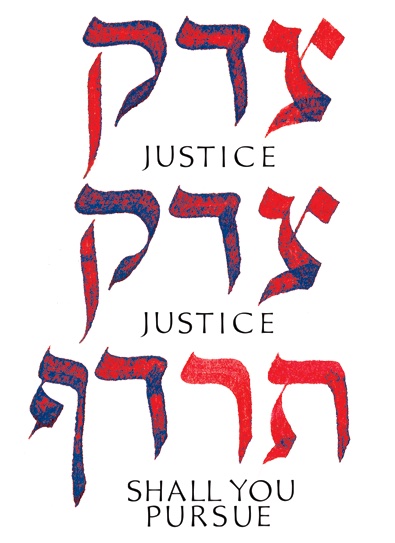
This is something we know to be true in the real world. We’ve watched Theodor Herzl build a movement that transformed Jewish life. We’ve watched Martin Luther King, Jr, march in the streets of Selma and transform hearts and minds. We’ve watched Greta Thunberg sitting alone outside Parliament talking about climate change; we’ve watched survivors of Residential Schools come forward to tell their stories of cultural genocide; we’ve watched Israelis gathering in the streets of their country to protest the erosion of democratic values by their government. And each of those movements is still growing. And each of those movements began when somebody realized that it was still possible to make a difference in this world.
This is the key to understanding the prophet’s message. When the prophet stands on the street corner and shouts at you to do better, be better, make a difference, it’s because they believe that you are capable of doing better, being better, and making a difference. It’s because they believe that you can change the world.
As it says in Pirke Avot:
לֹא עָלֶיךָ הַמְּלָאכָה לִגְמֹר וְלֹא אַתָּה בֶן חוֹרִין לִבָּטֵל מִמֶּנָּה
It is not your responsibility to complete all of the work,
but you are also not free to ignore it.[6]
“How to be a prophet” is a question that we need more and more people to be asking today: How to hold a vision for a better world. How to move past our differences and see humanity. How to recognize and speak about systemic injustice. How to hold fast to a belief that change can come.
The prophet Micah shares this vision for the future:
וְהָיָ֣ה ׀ בְּאַחֲרִ֣ית הַיָּמִ֗ים – In the days to come, the mountain of God’s House – the mountain of justice – will stand firm above the other mountains.
And the many peoples will say to each other,
‘Come, let us go up to that mountain that we may learn its ways…’
And they will beat their swords into plowshares and their spears into pruning hooks.
And everyone will sit beneath their vine and fig tree,
and no one will be afraid.[7]
It’s a beautiful vision. But as we said at the very beginning, the prophet doesn’t tell the future. This isn’t a prediction of future times. It’s an invitation. It’s a call to build something together. To work together to create a different kind of world.
Today, there are no more prophets standing on street corners. There are no more Isaiahs and Miriams and Jonahs and Deborahs hearing God’s voice and sharing their message. Instead, our tradition calls on all of us to hear the voice, and to be the voice of justice in a broken world.
On this Yom Kippur, and in the coming year, may we redouble our commitment to justice in all its forms. May we strive to see humanity, even when it’s not easy. May we speak out, even when it’s not our first impulse. May we be brave and honest like the prophet. And may we work together to write a better future.
Amen.
[1] Amos 7:14.
[2] Jeremiah 5:1.
[3] See No Bad Parts by Richard Schwartz, “Introduction.”
[4] Long Walk to Freedom, 1994.
[5] Isaiah 1:17.
[6] Avot 2:16.
[7] Micah 4:1-4.
 Rabbi Micah Streiffer
Perhaps it is my age, your comments here reminded me of a song from the show Hair, Easy to Be Hard by The Three Dog Nights. Your message about being a prophet today speaks loud. This needs to be taught in Parliament. It needs to be central to our Confirmation programs and to adult education. To really make a change, let’s teach more about the prophets in our schools. Let’s not just take our youth on learning trips. Let’s do what NFTY did so well, Mitzvah Corps.